.png)
.png)
.png)
Your Mind Keeps Replaying What Your Life Has Already Let Go Of

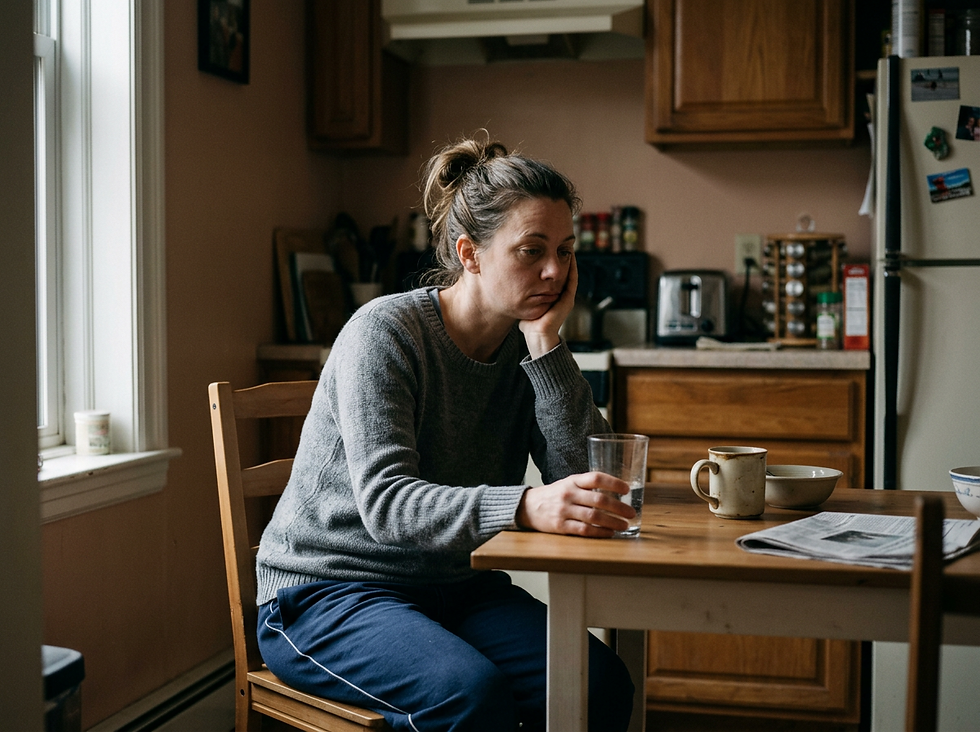
How much of your stress is coming from something that isn't even happening anymore?
Not the email on your screen. Not the room you are sitting in. Not the conversation you are having right now.
Something older.
A sentence you wish you had not said.
A look someone gave you months ago.
A choice you keep turning over, even though the moment to choose has passed.
An argument that ended, but still somehow starts again in your body every time you remember it.
This is one of the quiet ways overthinking keeps us stuck. The world moves forward, but the mind keeps reaching back. It opens old doors. It replays old scenes. It asks the same questions with no new evidence.
What if I had handled it differently?
Why did I say that?
What did they really mean?
How could I not have seen it sooner?
And before you know it, you are no longer here. You are back there.

The mind can replay what the body still remembers
Overthinking often feels like thinking harder will give you peace.
If you can just find the missing piece, you will be able to let it go. If you can replay the conversation one more time, maybe you will understand what happened. If you can imagine the perfect response, maybe the shame will loosen its grip.
But the mind is not always trying to solve. Sometimes it is trying to protect.
It takes a painful moment and runs it again, as if repetition can prevent it from ever happening again. It scans the past for danger. It builds alternate versions. It looks for a door that is already closed.
The threat is gone, but the body may not know that yet.
That is why an old memory can make your chest tighten. A passing thought can pull heat into your face. A regret can sit heavily in your stomach. Nothing is happening in the room, but your nervous system may respond as if it is.
You can be lying in bed, safe under the covers, and suddenly feel like you are back in the middle of a hard conversation.
You can be making coffee on a quiet morning and remember something from years ago, then feel your mood shift without warning.
You can hear one phrase, see one place, smell one scent, and return to a version of yourself that was hurt, embarrassed, rejected, or afraid.
This does not mean you are weak. It means your system is human.
Memory is not just information. It can carry sensation. It can carry emotion. It can carry unfinished energy.
And when the mind keeps returning to the scene, the body may keep preparing for a moment that has already ended.
Overthinking can feel productive, but it often keeps the loop alive
There is a difference between reflection and rumination.
Reflection has movement. It helps you see clearly. It supports responsibility, learning, repair, and choice.
Rumination circles. It asks the same question again and again. It tightens around the same detail. It turns pain into a mental room you keep walking back into.
Sometimes the difference is subtle.
You might tell yourself you are processing. You might believe you are being honest. You might think you are finally getting to the root of it.
But if you leave the thought feeling more tense, more ashamed, more trapped, or more distant from the present, it may not be helping you anymore.
Overthinking can dress itself up as growth.
It can sound like:
I just need to understand why it happened.
I need to make sure I never do that again.
I should have known better.
I cannot move on until I figure this out.
If I think about it enough, it will stop hurting.
There may be some truth inside those sentences. The issue is not that you care. The issue is that the mind can turn care into a cage.
Some moments need attention. Some need repair. Some need grief. Some need boundaries. Some need support from a trusted person or professional, especially if the memory feels overwhelming or connected to trauma.
But many thoughts do not need another hour of analysis.
They need a pause.
They need a breath.
They need the present moment to become louder than the old one.

You do not always need to solve the thought
Here is the shift many of us were never taught.
You do not always need to solve the thought. Sometimes you need to stop following it.
That does not mean you ignore what matters. It does not mean you pretend nothing happened. It does not mean you force yourself to be fine.
It means you recognize when thinking has stopped serving you.
A thought can enter your mind without becoming your assignment.
A memory can appear without demanding that you climb back inside it.
A regret can speak without you giving it the whole room.
Overthinking often convinces you that every thought deserves a response. It pulls you into debate. It asks you to defend yourself, explain yourself, judge yourself, rewrite yourself.
But not every thought is a signal. Some are echoes.
An echo can be loud. It can feel close. It can sound urgent.
Still, it is not the original event.
The conversation is not happening now. The mistake is not happening now. The argument is not happening now. The person is not standing in front of you now. The moment has passed, even if your mind keeps bringing it back.
This is where conscious breathing becomes useful.
Not as a cure. Not as a promise that old pain disappears. Not as a replacement for support when support is needed.
Breathing gives you something simple and real to return to.
The breath happens now. The body exists now. The ground beneath you is here now.
When your mind pulls you into a scene from the past, conscious breathing can interrupt the loop long enough for you to notice, “I am remembering. I am not reliving.”
That small space matters.
In that space, you can choose not to chase the thought.
Breath brings the body back into the room
When overthinking takes over, attention narrows. The mind zooms in on one sentence, one image, one fear, one regret.
The room around you fades. Your body becomes tense. Your breath may get shallow without you noticing. You might clench your jaw, hold your stomach, lift your shoulders, or stop fully exhaling.
Breathwork begins with noticing.
Not fixing. Not forcing. Not performing calm.
Just noticing.
A slow breath tells the body that there is room. A full exhale can soften the feeling that you need to brace. Feeling your feet on the ground gives the mind a clear message. You are here.
This is why breathing can feel so grounding. It does not ask the mind to win an argument with itself. It gives attention a new place to land.
The goal is not to erase the thought. The goal is to stop feeding it with your whole nervous system.
You may still remember. You may still feel sadness, embarrassment, grief, or anger. Those feelings are allowed.
But you can be with them from here.
From this breath.
From this floor.
From this body.
From this moment that is actually happening.

A simple practice for when the loop starts again
You do not need a perfect setup. You do not need a full hour. You do not need to feel ready.
Try this the next time you notice your mind replaying something that is not happening anymore.
Pause where you are
Do not rush to push the thought away.
Just pause.
Name what is happening in plain language.
“I am replaying something.”
“I am remembering an old conversation.”
“My mind is pulling me back.”
This helps create a little distance. You are not the loop. You are noticing the loop.
Feel your feet on the ground
Bring your attention down.
Feel the pressure of your feet against the floor. Notice the weight of your body. If you are sitting or lying down, notice where your body is supported.
Let the ground remind you that you are not floating inside the memory. You are here.
Take a slow breath in
Inhale gently through your nose if that feels comfortable.
Do not strain. Do not try to take the biggest breath possible.
Let the breath be steady and simple.
Feel the air enter your body. Let your shoulders stay soft.
Exhale fully
Let the exhale take its time.
You can breathe out through your mouth or nose. Choose what feels natural.
Imagine you are giving the body permission to put down whatever it picked up from the memory.
Not forever. Just for this moment.
Notice what is actually happening around you
Look around the room.
Name a few things you can see. A wall. A window. A cup. A blanket. A plant. Your hands.
Listen for sounds. Notice the temperature. Feel the texture of your clothes or the surface beneath you.
This is not a trick. It is a return.
You are letting the present become specific again.
Let the thought pass without chasing it
The thought may come back. That is normal.
You do not need to fight it.
You can say, “Not right now.”
You can say, “I see you.”
You can say nothing at all.
Then return to the breath.
This practice may take less than a minute. It may not make everything feel better at once. That is not the point.
The point is to remember that you have a choice when the mind opens an old door.
You do not have to walk through every time.
Remembering is different from reliving
Some parts of the past deserve to be remembered.
They shaped you. They taught you. They hurt you. They changed what you needed, what you noticed, what you no longer accept.
Forgetting is not always the goal.
There are things worth honoring. There are losses worth grieving. There are choices worth learning from. There are younger versions of you who deserve compassion, not erasure.
But remembering and reliving are not the same.
Remembering says, “That happened.”
Reliving says, “It is happening again.”
Remembering gives the past a place in your story.
Reliving gives the past control of your body, attention, and breath.
The past deserves to be remembered. It does not need to be relived.
That sentence can be a hand on the shoulder. A boundary. A reminder. A way back.
You are allowed to take the lesson without reopening the wound every night.
You are allowed to regret something without punishing yourself forever.
You are allowed to miss someone without returning to the sharpest moment.
You are allowed to remember pain and still notice the light in the room.
Coming back to now is a practice
There may not be one final moment where the mind never replays the past again.
Healing rarely works like a clean line.
Some days, the old thought may pass quickly. Other days, it may pull harder. A stressful week, a tired body, or an unexpected reminder can make the loop louder.
That does not mean you are back at the beginning.
Each return matters.
Every time you pause, breathe, feel the ground, and notice the present, you teach your system something different.
You teach it that memory is not the same as danger.
You teach it that thought is not the same as truth.
You teach it that you can feel something without being taken over by it.
You teach it that now is available.
This is the heart of Human Powered’s approach to breathwork and wellness. Not escaping the human experience. Not bypassing the hard parts. Not pretending a few breaths can solve every ache.
It is about slowing down enough to come back to yourself.
Breathing with your body instead of arguing with your mind.
Grounding in what is real.
Making space between the thought and the reaction.
Learning that you can meet yourself with steadiness, even when old pain comes knocking.

Maybe tonight the same thought will try to return.
Maybe it will arrive as you turn off the light. Maybe it will bring the same question it always brings. Maybe it will ask you to replay the scene one more time.
If it does, you can pause.
Feel your feet. Feel the bed beneath you. Take one slow breath in. Exhale all the way out. Look for what is true now.
You are here.
The moment is over.
The breath is happening.
And you do not have to follow the thought all the way back.
If this way of practicing feels like something your body has been asking for, Human Powered offers breathwork experiences designed to help you slow down, ground, and reconnect with yourself one breath at a time.
Maybe you do not need to figure this out again.
Maybe you just need to come back to now.


Comments