


Finding Space to Breathe in a City That Never Stops

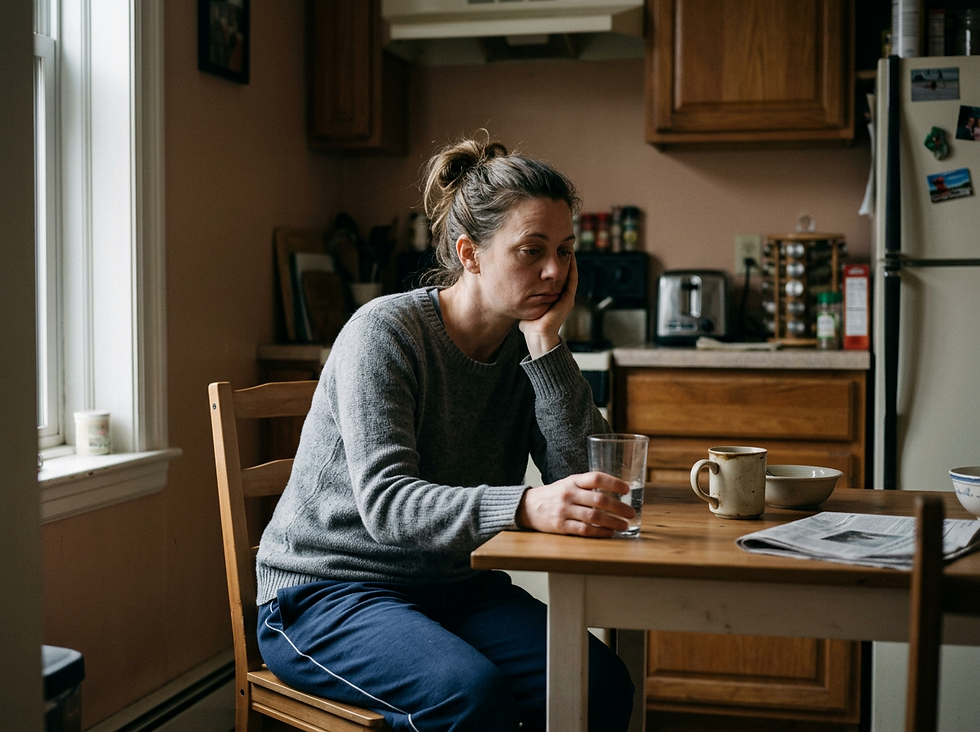
You can spend an entire day in New York moving from one responsibility to the next, answering messages between subway stops, eating lunch too quickly, making it to one more thing, then finally getting home and realizing your body stopped moving before your mind did.
The city quiets down for the night, at least a little. Your apartment door closes. The shoes come off. The phone lands on the counter. Still, the day keeps playing in the background.
A deadline you almost missed. A conversation you need to respond to. A bill to pay. Plans you said yes to when you were already tired. The next morning’s commute. The next email. The next version of yourself you feel like you are supposed to become.
New York City has a way of making motion feel normal. The pace can be exciting, useful, even energizing. It can also make rest feel like something you have to earn.
That is why making space to pause matters. Not because the city is bad. Not because ambition is wrong. Because a person cannot live only in response mode.
You do not need to escape New York to find a moment of quiet. Sometimes, you just need to make space for one.

City life keeps asking for more attention
Living in New York often means living with layers of demand.
There is the visible stuff, like work, commuting, errands, noise, weather, rent, and the daily logistics of getting from one place to another. Then there is the quieter pressure underneath it.
Be available. Keep up. Say yes. Stay informed. Reply faster. Make plans. Make progress. Have an answer. Have energy.
Even “downtime” can become another stream of input. A quick scroll turns into twenty minutes of headlines, opinions, group chats, restaurant recommendations, and other people’s lives. A walk home becomes a podcast, a playlist, a phone call, and three text threads at once.
None of this is unusual. That is part of the problem. Constant stimulation can start to feel like the default setting.
After a while, many people forget what it feels like to be with themselves without filling the space immediately. Silence feels awkward. Stillness feels unproductive. A free evening can bring guilt instead of relief.
For busy New Yorkers, the question is not always “How do I relax?” Sometimes the better question is, “Where in my day do I stop being pulled in every direction?”
A pause is not wasted time
Making time for yourself does not have to mean disappearing for a week, deleting every app, or building a perfect morning routine. For most people, that would last about two days.
A pause can be smaller and more realistic.
It can be five minutes before opening your laptop. A walk without headphones. Sitting on a bench instead of rushing straight to the train. Taking three slow breaths before walking into your apartment. Saying no to one plan because your body has already answered the question.
These moments matter because they interrupt the automatic pace of the day. They give the nervous system a chance to register that nothing needs to be solved in that exact second.
That does not mean problems vanish. Work is still work. The subway is still the subway. Notifications still arrive.
But a pause can create a little room between what happens and how you respond to it. That space is small, but it is real. In a city that rewards speed, choosing a slower moment can feel almost radical.
It can also be practical. When there is room to notice what is happening internally, it becomes easier to recognize basic needs. Food. Rest. Movement. Quiet. A clearer boundary. A real conversation. A night in.
The point is not to become perfectly calm. The point is to stop treating constant pressure as the only acceptable way to live.
Breathwork is one way to create a dedicated pause
Breathwork is a simple idea with a lot of possible forms. At its core, it uses conscious breathing patterns to help bring attention back to the body and the present moment.
For someone curious about breathwork in NYC, the appeal is often practical. You do not need special equipment. You do not need to identify as a “wellness person.” You do not need to already know how to meditate.
A guided breathwork session usually gives you a structure to follow. A facilitator explains the breathing pattern, sets the tone for the session, and offers reminders along the way. Music may help shape the experience. Some sessions include meditation, rest, or sound elements.
Beginners can generally expect to lie down or sit comfortably, listen to guidance, and breathe in a specific rhythm for a period of time. Some people notice physical sensations, emotion, warmth, tingling, or shifts in attention. Others may simply notice how unfamiliar it feels to focus on breathing for more than a few minutes.
No one can promise exactly what a session will feel like. Each person brings a different body, day, mood, and history into the room. A grounded facilitator will make space for that.
Breathwork is also not a replacement for medical care, therapy, or treatment for anxiety, trauma, or other health concerns. It can be a supportive practice for some people, but it should be approached with care, especially for anyone with medical conditions or concerns about breath-based practices.
The value for many people is that guided breathwork creates a container. For a set amount of time, there is one thing to do. Breathe. Listen. Notice. Return.
In New York, that kind of simplicity can feel rare.

What makes a guided session different from breathing on your own
You can absolutely pause and breathe on your own. In fact, that may be the best place to start. A few conscious breaths during the day can help you notice how much tension you are holding.
A guided session offers something different: support, structure, and a space separated from daily distractions.
That separation matters. At home, it is easy to get pulled into laundry, dishes, texts, roommates, pets, or the mental list of everything waiting for you. In a dedicated setting, the environment itself helps mark a transition.
For people looking for breathwork classes in Queens, a guided session may offer:
A facilitator who explains the process before it begins
A clear breathing pattern to follow
Curated music that supports the pace and tone of the session
Gentle reminders to stay with the breath
Time to rest and integrate afterward
A room where the main expectation is simply to participate honestly
That last part is easy to overlook. Many parts of city life ask for performance. Look capable. Be efficient. Keep it together. Know what you are doing.
A breathwork session does not have to be another place to perform. For beginners, especially, the practice can be approached with curiosity rather than pressure. If the mind wanders, that is part of it. If the breathing feels unfamiliar, that is part of it too.
The goal is not to “win” at breathing. The goal is to make contact with the present moment in a way that feels supported.
Finding breathwork in Astoria, Queens
For those seeking guided breathwork in Astoria, Human Powered Breathwork offers a local option in Queens.
Founded by Anthony Lenzo, Human Powered Breathwork creates guided sessions built around conscious breathing, curated music, and facilitator support. Depending on the session, the experience may also include meditation and a crystal singing bowl sound bath.
The setting is part of the practice. Instead of squeezing a few breaths between meetings or trying to settle down while the phone keeps lighting up, participants step into a dedicated environment designed for the session itself.
That does not mean the outside world disappears. It means there is a clear place to set it down for a while.
Human Powered is not about making dramatic promises. It offers a guided space to breathe, listen, and step away from the usual stream of tasks and input. For many New Yorkers, that alone is meaningful.
Astoria also makes sense for this kind of practice. It is close to the intensity of Manhattan without feeling removed from real city life. People come from work, from home, from the train, from full days. The practice meets them there.
For anyone exploring breathwork in Astoria or looking into breathwork in NYC more broadly, a local session can be a way to try the practice without turning it into a major production.
Making space can start before the session
One of the most useful things about breathwork is that it can change how a person thinks about time.
A session may last for a set period, but the bigger lesson is often smaller: space can be created. It does not have to appear on its own.
That can look like leaving ten minutes earlier so the commute does not become another sprint. It can mean not checking email during the first few minutes after waking up. It can mean taking one real breath before replying to a message that annoyed you.
These are not huge life changes. They are small refusals to let the day take every inch.
New York will always offer more to do. More invitations. More ambition. More noise. More opportunities. More reasons to keep going.
The work is learning when to participate and when to pause.
A city that never stops does not require you to abandon yourself to keep up with it. You can live here, work here, build here, love here, and still protect moments that belong to you.
If you are curious about experiencing guided breathwork for yourself, explore Human Powered Breathwork’s upcoming sessions and see what is currently available in Astoria, Queens. A single session does not need to solve your life. It can simply be a place to begin making space.


Comments