


New York Never Stops How to Protect Your Mind in the City That Demands Everything

The trains keep moving.
The streets stay loud.
Phones keep buzzing.
People are always going somewhere.
Work does not always end when you leave the office. It follows you onto the subway, into the bodega line, up the stairs, through dinner, and sometimes into bed. There is always another meeting, another email, another deadline, another place to be.
That is the rhythm of New York. It is part of what makes the city electric. The momentum is real. The ambition is real. The feeling that anything could happen here is real.
But in a city that never stops, it is easy to forget that you do not have to keep running at the same speed.
New York asks a lot from the people who live here. That does not make it a bad place. It makes it a demanding place. And anything that demands a lot from you also requires you to care for the person carrying that load.

New York teaches your nervous system to stay ready
Life in New York trains you to react.
You react to the train delay. You react to the cyclist cutting through traffic. You react to the siren behind you, the person walking too slowly in front of you, the text that needs an answer, the rent increase, the group chat, the packed grocery aisle, the unread email count.
After a while, reaction starts to feel like personality.
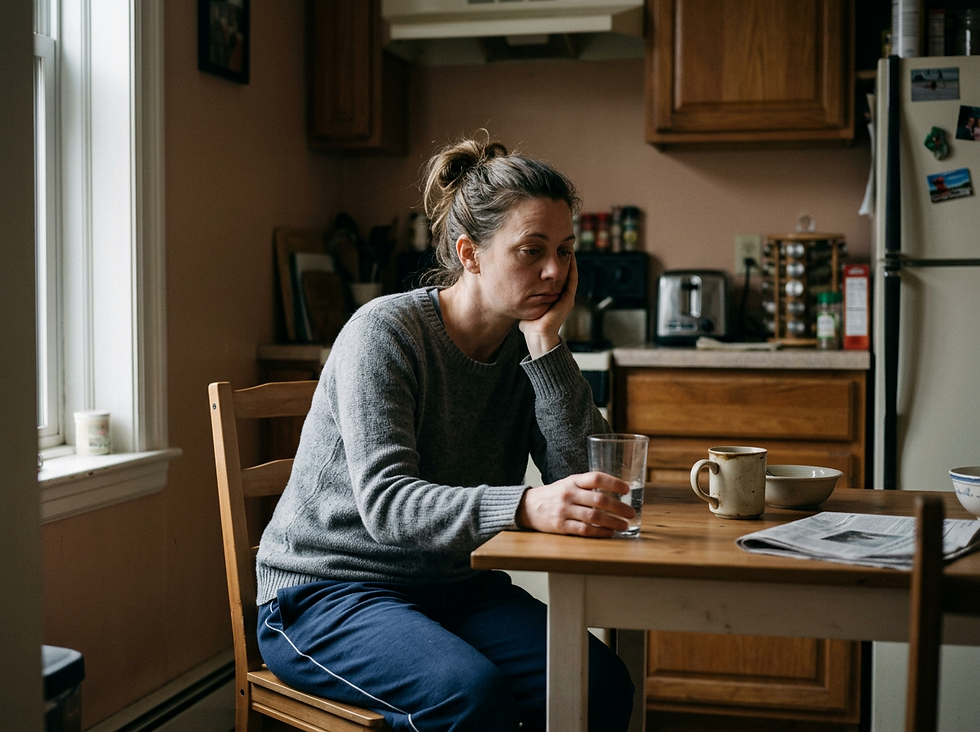
You move faster than you realize. You scan more than you rest. You check your phone before you know why. You sit down, but your body stays alert. Even quiet moments can feel suspicious, as if you are forgetting something.
That is the hidden cost of constant stimulation. It does not always arrive as a dramatic crisis. More often, it looks like:
Trouble winding down after a long day
Feeling tired but wired at night
Irritation over small things
Difficulty focusing unless there is pressure
Reaching for your phone any time there is a pause
Feeling guilty when you are not being productive
Needing noise because silence feels uncomfortable
None of this means you are weak. It means your system has adapted to a city that rarely gives you a soft landing.
New Yorkers often normalize a level of sensory input that would exhaust someone visiting for the weekend. Crowded trains, loud streets, bright screens, dense schedules, thin walls, big goals, expensive everything. The body keeps score of all of it, even when the mind says, “I’m fine.”
Pressure can become invisible when everyone is moving
One of the strange things about living in New York is how quickly intensity becomes ordinary.
A 45-minute commute with delays becomes normal. Eating lunch while answering messages becomes normal. Canceling rest because one more thing came up becomes normal. Sleeping with your phone next to your face becomes normal. Being available at all hours becomes normal.
Then you look around, and everyone else seems to be doing it too.
That comparison can be brutal. Someone is always opening a restaurant, running a marathon, getting promoted, sending a perfect follow-up, dating, networking, training, creating, building, renovating, performing, posting, moving forward.
The city can make stillness feel like falling behind.
But motion is not the same as progress. Constant access is not the same as connection. Being busy is not the same as being well.
Your mind needs recovery the same way your body needs sleep. Without it, the system does not become stronger. It becomes more reactive.
That is why wellness matters so much in New York. Not as a luxury. Not as an aesthetic. Not as a reward for people with open schedules and quiet homes. Wellness is maintenance for a life that asks you to absorb a lot.
Wellness in the city does not mean leaving the city
When people hear the word wellness, they often picture something that feels far away from real New York life. A silent retreat. A beach. A full day off. A perfect morning routine. A version of life with more space, more money, more time, and fewer people coughing on the train.
That image does not help most people.
For New Yorkers, wellness has to work in real conditions. It has to fit between subway stops, between shifts, between school pickup and laundry, between a long day and an early alarm. It needs to be simple enough to use when life is loud.
Wellness in a city can mean taking 10 minutes to breathe before going back into the noise.
It can mean walking outside instead of staying behind another screen.
It can mean creating a boundary around work and keeping it even when someone tests it.
It can mean eating a real meal without multitasking through every bite.
It can mean putting your phone away for the first 20 minutes after waking up.
It can mean moving your body because stress needs somewhere to go.
It can mean having one space where you do not need to impress anyone.
It can mean giving your nervous system a break from constantly reacting.
This is not about becoming a different person. It is about becoming more honest with the life you are already living.

Small pauses can protect you from a constant state of urgency
The mind does not always need a full reset. Sometimes it needs proof that the emergency is over.
A pause tells the body, “You are allowed to stand down for a moment.”
That pause can be short. It can be private. It can happen in places that do not look peaceful at all.
Try this before re-entering the city after a stressful moment:
Put both feet on the ground.
Drop your shoulders.
Inhale slowly through your nose.
Exhale longer than you inhale.
Notice one thing you can see, one thing you can hear, and one thing you can feel.
Wait before you reach for your phone.
That whole reset can take less than two minutes.
It sounds small because it is small. That is the point. A practice you can actually repeat will help more than an ideal routine you never use.
New York does not always offer silence, so you learn to create quiet differently. You create it by reducing inputs. You create it by doing one thing at a time. You create it by letting a moment be enough without filling it.
Some forms of quiet are internal. You can stand on a platform and stop arguing with the delay. You can walk a block without checking a message. You can sit in a cab and let the city pass without turning the ride into another work session.
The environment may stay loud. Your response can soften.
Boundaries are a form of city survival
New York rewards availability. The person who responds quickly often seems more committed. The person who can stay late seems more serious. The person who says yes gets remembered.
That can make boundaries feel risky.
Still, a life with no boundaries does not stay impressive for long. It becomes thin. Sleep gets shorter. Patience drops. Creativity flattens. Relationships get whatever attention is left. The mind gets crowded.
A boundary is not a dramatic announcement. It can be a clear pattern.
For example:
No work email during the first meal of the day
No phone in bed
One walk each day with no podcast, call, or scrolling
A hard stop time for screens at night
One evening each week with no plans
A short reset after work before talking to anyone at home
A limit on saying yes out of guilt
The best boundaries are specific. “I need better balance” is hard to protect. “I do not answer non-urgent messages after 8 p.m.” gives your mind something solid to stand on.
People may not love your boundary at first. That does not mean it is wrong. It means they benefited from your lack of one.
Your body is part of your mental life
In a city built on movement, many people still spend most of the day locked in mental effort. Thinking, planning, reacting, deciding, typing, scrolling, worrying.
The body carries the stress, but it often receives the least care.
Movement helps because stress is physical. It shows up in the jaw, shoulders, stomach, chest, hips, and breath. A walk across a bridge, a slow lap around the block, stretching on the floor, climbing stairs with attention, dancing in the kitchen, or taking a class can help discharge some of what the day built up.
This does not need to become another performance. You do not have to track every step or turn rest into a project.
Move to return to yourself.
Sleep matters too. New York makes it easy to treat rest as optional. There is always somewhere to go, something to watch, someone to meet, something to finish. But sleep is not dead time. It is repair time. It gives the mind a chance to sort, clear, and recover.
Protecting sleep in this city may feel like an act of rebellion. Let it be one.

A space where you do not perform is essential
New York can make life feel like a stage.
People present themselves on the street, at work, online, at dinner, at the gym, in dating apps, in apartment lobbies, in creative rooms, in social circles. Even casual life can start to feel observed.
That constant self-monitoring is tiring.
Every person needs at least one place where they do not have to be impressive. A room, a bench, a therapist’s office, a friend’s kitchen, a corner of a park, a community space, a class where no one knows their job title, a long walk with no destination.
The space matters less than the permission it gives.
A non-performing space lets you stop editing yourself. You can be quiet. You can be uncertain. You can be tired. You can be ordinary. You can be human without turning it into content, progress, or proof.
That kind of space is not indulgent. It is protective.
If your whole life requires output, you eventually lose contact with the part of you that exists before achievement. That part needs care too.
The city can still be the place that restores you
New York takes energy, but it also gives it back in ways no other place can.
A sunrise over the East River. A stranger holding the door when your hands are full. Steam rising from a food cart in winter. Musicians in the subway. A quiet side street after rain. The first warm day in spring when everyone seems to come back to life at once.
The same city that overwhelms you can also remind you that you are alive.
The goal is not to reject New York’s intensity. The goal is to build a relationship with it that does not cost you your mind.
That means noticing when the city’s pace has become your only pace. It means choosing recovery before you hit a wall. It means treating quiet as useful, not lazy. It means giving yourself the same care you give your job, your goals, your people, and your future.
New York Never Stops How to Protect Your Mind in the City That Demands Everything is more than a title. It is a daily question. What helps you stay human in a place that keeps asking for more?

You do not have to earn rest
A high-performance city can make rest feel like something you receive only after everything is done.
But everything is never done.
There will always be another email, another errand, another bill, another plan, another train to catch. If rest only comes after completion, it may never come at all.
Start smaller.
Take the breath before the reply. Take the walk before the next screen. Take the evening without explaining it. Take the sleep seriously. Take the quiet when it appears. Take the pause even if the city keeps moving around you.
New York will continue to demand energy, attention, speed, and resilience. That is part of its power. But you are not a machine built to match the city without care.
You are a person living inside all that motion.
Let the trains keep moving. Let the streets stay loud. Let the emails wait for a moment longer than usual.
Your mind deserves somewhere to rest, even here. Especially here.


Comments